Video Transcription by Denise R. Alberigi Mother of Amanda Dedicated parent to finding a cure
HOW TO HELP
Juleen Stramiello Cofounder and Past President
JULEEN STRAMIELLO:
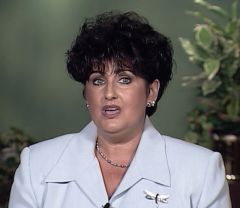
Hello, my name is Juleen Stramiello and this video has been produced to promote the need for research into a disease called reflex sympathetic dystrophy also known as complex regional pain syndrome.
Reflex sympathetic dystrophy, commonly called RSD, is a debilitating, chronic neurological disease caused by a malfunction of the sympathetic nervous system which can cause excruciating pain. Throughout this video you will see clips from television broadcasts concerning RSD patients.
Have you ever heard of Reflex Sympathetic Dystrophy?
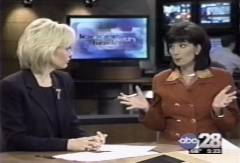
ABC NEWS REPORTER #1: So, Marti, have you heard of RSD?
ABC NEWS REPORTER #2: I have never heard of it before.
ABC NEWS REPORTER: "Most people have not heard of RSD"
ABC NEWS REPORTER #1: Well, most people have not.
CNN NEWS REPORTER: 2 ½ to 3 million Americans suffer constant pain from a disease you have probably never heard of.
CBS NEWS REPORTER #1: Reporter Mary Beth Byrd joins us now to tell us about what's called RSD.
CBS NEWS REPORTER #2: That is right, those are the initials.
CBS NEWS REPORTER #3: Never heard of this.
CBS NEWS REPORTER #2: You are not alone. So many people have not, and that is the problem with RSD. The full name for this condition is reflex sympathetic dystrophy and you really don't hear to much about it, and that's why so many people don't recognize the signs when they get it.
JULEEN STRAMIELLO: You see, so few people have heard of RSD. Usually only the patients who suffer from it, and the doctors who treat them. So, what exactly is RSD?
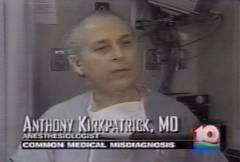
DR. ANTHONY KIRKPATRICK: We don't understand why that is. We think it has to do with a reflex. There's a reflex that is going on and on and on, we have to go in there and block it temporarily and it just can't get started and wound up.
JULEEN STRAMIELLO: As you can see, RSD is quite complex and its causes are not known. We here at the foundation are dedicated to finding what causes RSD and finding a cure for this dreadful disease. So, what does it feel like to be afflicted with RSD?
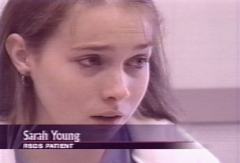
CNN NEWS REPORTER: A knee injury triggered her bout with RSDS 18 months ago.
Sarah Young
SARAH YOUNG: I don't like what happened to me. I don't want it to happen to me anymore. I want to be a normal teenager.
SARAH'S MOTHER: It took awhile to show up what it was, after going to multiple doctors who did not...they were clueless. I had a couple of doctors tell me to cut her leg off. Her leg would be so blue and ice cold.
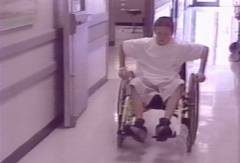
Justin Raulerson
CNN NEWS REPORTER: Justin Raulerson is 14 years old and is now back in a wheelchair because the pain is so intense in his lower right leg. Justin's mom Renee says it began with a broken ankle 2 ½ years ago. Even after the cast was put on the pain only intensified.
JUSTIN'S MOTHER: The doctors kept telling me every night, it's in his head, it's the kid. I would say no it is not. There is something going there!
KATHLEEN STEWART: You will have different people who have RSD describe it in different ways, but one of the universal descriptions is the burning pain, the part that is affected is on fire.
MELISSA LISCOM: You know how when you hold an ice cube and you hold it in your hand for too long and it starts to burn but it's cold, that's kind of what it felt like.
BETH McDONALD: The burning just became outrageous. Just a burning like if you have a fireplace at home and you put your hand in it, it feels like that, that is how I lived every day.
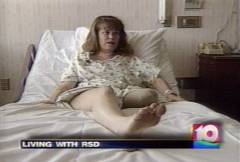
JULEEN STRAMIELLO: Some healthcare professionals are either unaware of RSD or do not know how to diagnose it. Many cannot understand what is wrong with the patient and cannot offer them any assistance. It is not rare for an RSD patient to go to several doctors before they are finally, correctly, diagnosed with RSD. It is actually a relief to patients just knowing what they are experiencing is not just in their heads but is a real and a very serious disease.
CBS NEWS REPORTER: For Kathleen Stewart being diagnosed with a terribly debilitating disease was actually a relief. The pain started with an infection in her arm and from there it spread. It took six months for doctors to diagnose her with reflex sympathetic dystrophy or RSD. It is a disease of the nervous system that can result from a simple injury like a sprain. The pain it causes can be unbearable.
Dr. Anthony Kirkpatrick: "Unfortunately, there is no specific laboratory test for this disease."
DR. ANTHONY KIRKPATRICK: Unfortunately, there is no specific laboratory test for the disease. You have to rely on your clinical skills. You have to be looking for objective findings in the patient.
JULEEN STRAMIELLO: University of South Florida professor Dr. Anthony Kirkpatrick explains that early diagnoses is vital, that at times, it is extremely difficult because of lack of awareness in physicians. Also, there is no single diagnostic tool that can identify RSD. Clinical knowledge and experience along with a detailed case history and examination is necessary for arriving at an early diagnosis. RSD along with other causes of chronic pain can lead to forms of emotional suffering such as depression, anxiety irritability and even suicide. In children the loss of pleasurable activities and a sense of helplessness only adds to their pain. In February 2002, I attended an International Symposium on RSD. The number of individuals from around the world that suffer from this disease astounded me. There were people in full bed cots with blankets covering their affected areas. There were children in wheelchairs in pain with their parents sitting beside them feeling hopelessness and despair. There were both adults and children using canes, crutches and walkers grimacing with each step. I noticed some patients crying. Some of these individuals have lost an extremity due to RSD. Not because of the pain, but because of complications of this disease such as recurring infections.
CBS NEWS REPORTER: For Beth MacDonald her experience goes back 11 years. It has spread now throughout most of her body and has already taken one of her legs.
Beth McDonald: "My leg was going to become gangrene."
BETH McDONALD: I asked them to take my leg off because I just couldn't ... the pain was so bad beneath my knee and I couldn't clean it out. It was going to become gangrene and blood disease and everything else.
JULEEN STRAMIELLO: As I watched these courageous souls at the recent symposium, I realized how fortunate I am that I have responded favorably to sympathetic nerve blocks... Oh, did I forget to mention that I too am afflicted with RSD. Just a few years ago I was nearly bedridden and wheelchair bound. This disease is devastating and a cure must be found for the millions of people who suffer from RSD around the world. The International Research Foundation is committed to the establishment of a world-wide network of research centers creating a database with up-to-the-minute results on ongoing RSD research. The Foundation is committed to raising funds to support clinical investigations anywhere in the world that show a promise of curing this dreadful disease. We cannot accomplish this on our own. We need your help. Your donations for help support the critical research necessary to cure RSD.
To find out more on how you can help us, please visit our website at WWW.RSDFOUNDATION.ORG, or call our International Headquarters in the United States at 1-813-907-2312.

 Video Transcription by